


Scent of Success: Taplejung Farmers Trade Festivals for a Golden Harvest
Farmers in Taplejung put festivals aside to harvest “Black Gold” cardamom, chasing strong 2025 market prices to secure their livelihoods.

Asha Limbu
Taplejung, December 14, 2025
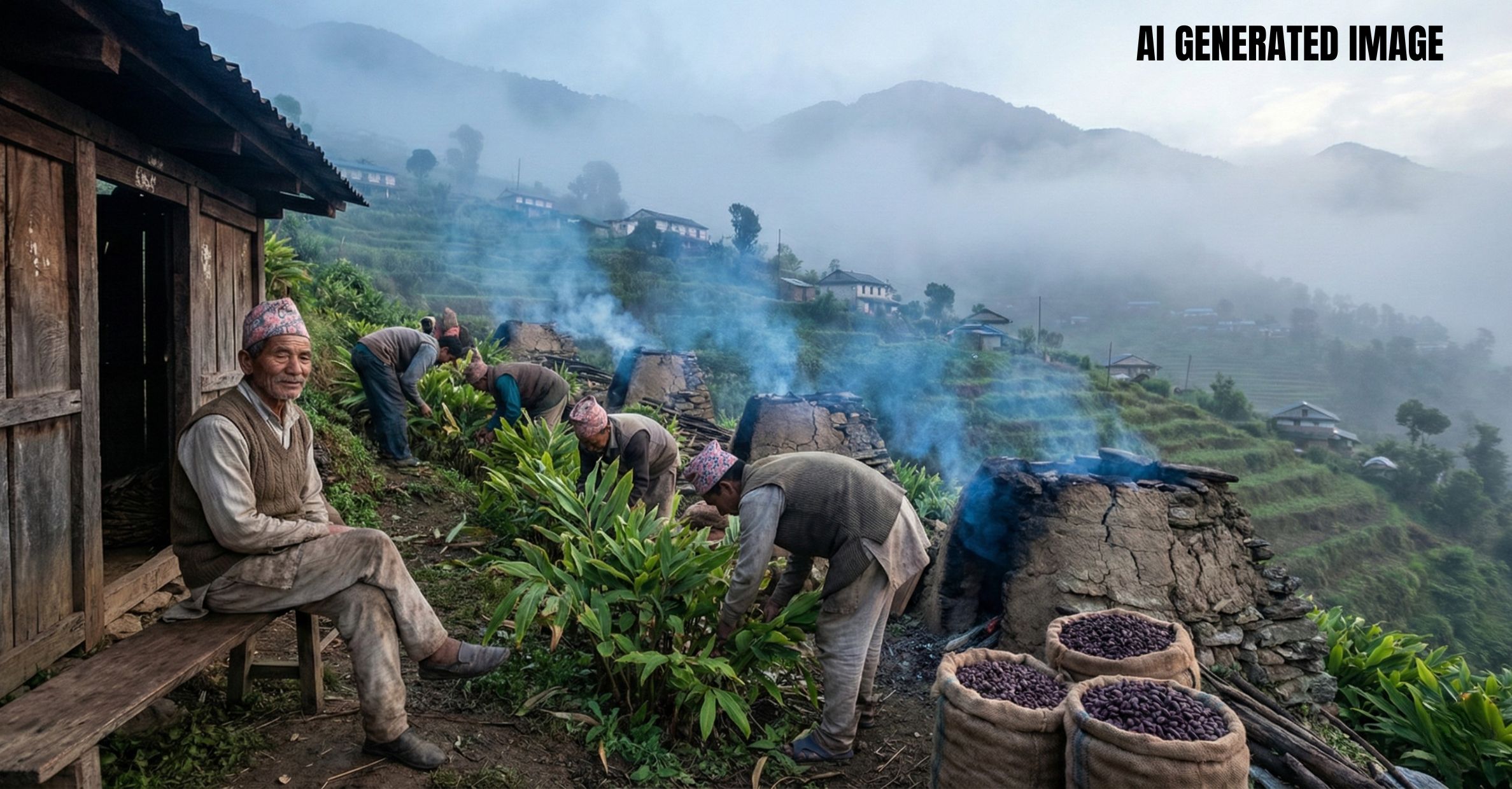
In the cool, misty hills of Taplejung, the air is thick with the unique, smoky aroma of drying large cardamom, known affectionately by the locals as “Black Gold” or Alaichi.
As the calendar turns to the end of November 2025, the bustling harvest season is finally winding down, leaving behind a story of hard work that took precedence over even the biggest celebrations. For the farmers of this remote eastern district, this year’s harvest was not just about agriculture; it was a race against time and a gamble on market prices that define their livelihoods.
Usually, the months of October and November are reserved for the joy of Dashain and Tihar, Nepal’s biggest festivals. Families gather, feasts are cooked, and swings are built in the villages. However, for farmers in Faktanglung Rural Municipality, the fields called louder than the festivities. The cardamom plants, heavy with dark purple pods, were ready to be picked, and the high market rates earlier in the season motivated everyone to stay in the orchards.
Roshan Limbu, a local farmer who spent the last month living in a temporary hut near his field, shared his experience with a tired but satisfied smile.
“We did not have the luxury to sit and relax for the festivals this year,” Roshan explained, dusting off his hands after a long day. “When the price is good, the field calls us more than the feast. We worked from morning until night, sometimes even sleeping near the drying kilns to make sure the cardamom dried perfectly. It is exhausting work to carry the loads up and down these steep slopes, but this ‘Black Gold’ is what feeds our families and sends our children to school. We celebrated Tihar by lighting lamps in the drying shed instead of our homes.”
The market prices in 2025 have been a rollercoaster for these hardworking communities. Back in August, the price for 40 kilograms (one man) of cardamom soared to around Rs. 94,000, creating a wave of excitement. However, as the harvest peaked and more produce entered the market in late October and November, the rates fluctuated, currently hovering around Rs. 88,000 to Rs. 90,000 in the district headquarters of Phungling.
While this is slightly lower than the early-season peak, it is still a strong and profitable rate compared to the lows of previous years.
Kamal Baral, a trader in the bustling market of Phungling, notes that farmers are becoming smarter sellers.
“The market changes very fast, sometimes daily,” Kamal stated on November 28. “A few weeks ago, the demand was very high. Now, it has cooled down a little as international demand shifts. We tell farmers that quality is key. If the pod is big, properly dried, and the tail is cut neatly, it still fetches a premium price. We are hopeful the rates will stay steady as we move into the deep winter.”
As December approaches, the smoke from the traditional drying ovens, or bhattis, is slowly fading. The “Black Gold” is now packed into sacks, ready to be transported to markets in Birtamod, and eventually to India and beyond.
For the people of Taplejung, the 2025 cardamom season will be remembered as the year they traded festival rest for the promise of a better future, securing their earnings one pod at a time.
Comments
0 comments · join the conversation
No comments yet
Be the first to share your thoughts.
Add a comment
Your comment will appear after a quick review.
Comment submitted
Thanks! Your comment is in the moderation queue and will appear after verification.
Reply to comment
0 replies
Reply submitted
Thanks! Your reply is in the moderation queue and will appear after verification.