


From Farms to Foreign Markets: Nepal’s Growing Export Story
Over the past five years, Nepal’s export scene has shown important changes that matter to farmers, traders and small business owners across the country

Asha Limbu
Kathmandu, December 21, 2025
Over the past five years, Nepal’s export scene has shown important changes that matter to farmers, traders and small business owners across the country. While Nepal has always sold products like tea, spices and textiles to markets abroad, it has been the rise in refined oil exports in recent years that has changed the trade picture most dramatically.
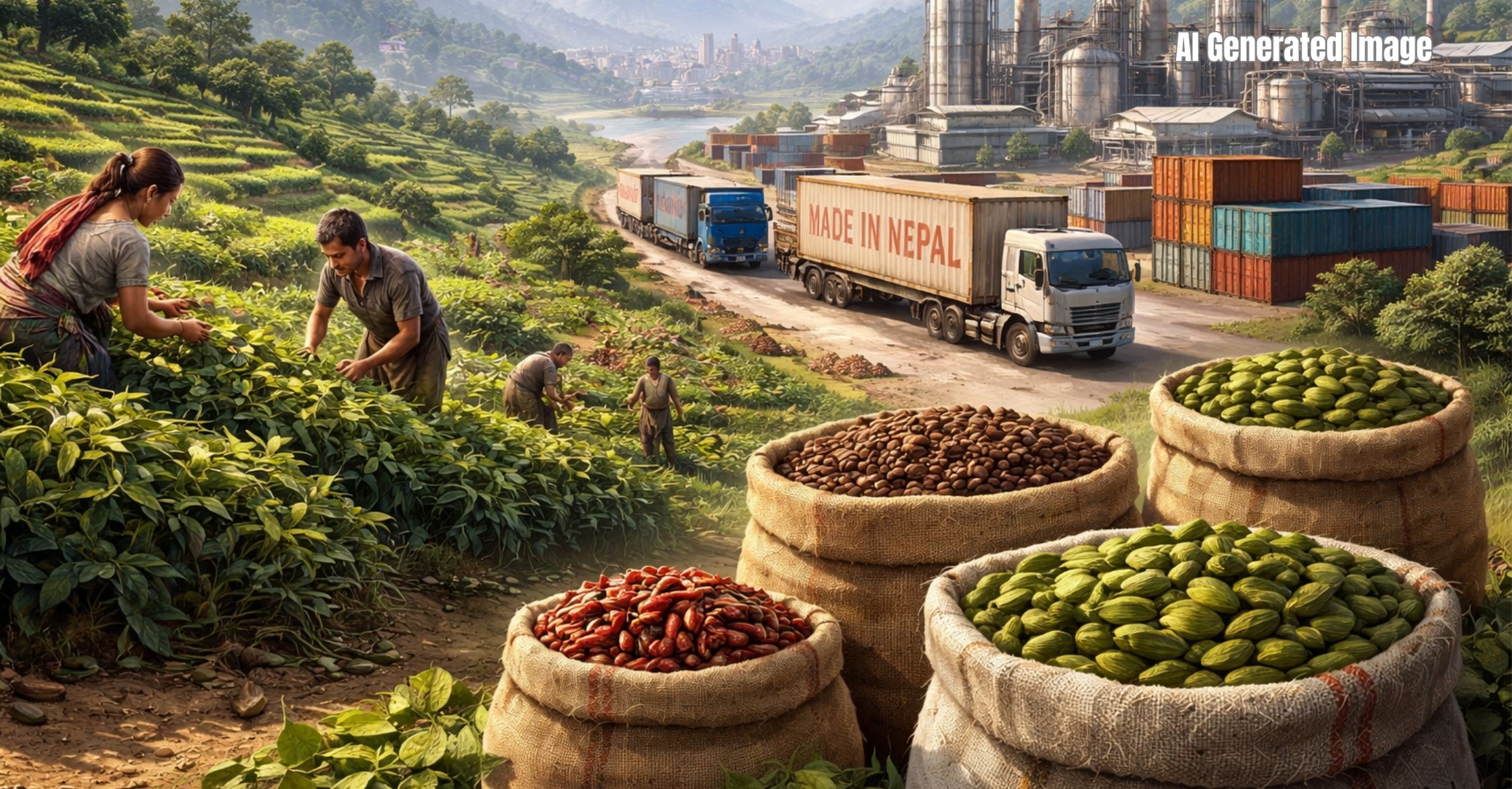
Traditionally, Nepal’s major exports have included tea, coffee and spices, textiles and carpets, iron and steel products, wood and processed foods. In 2024, these goods together helped make up a wide range of export items, with animal and vegetable fats and oils leading the list, followed by coffee, tea and spices, iron and steel, carpets, and wood products. These top export categories accounted for about two-thirds of the total value Nepal shipped to other countries last year. Asia has been the biggest market for Nepal’s exports, with countries like India buying the largest shares.
In the fiscal year 2024/25, Nepal’s total export value reached a record high of Rs 277 billion, rising by nearly 82 percent compared to the previous year. This strong increase was driven mainly by the export of refined edible oils — especially soybean and sunflower oil — even though Nepal does not grow these oilseeds in large quantities. Instead, crude oil is imported, processed locally, and then sent mainly to India under trade agreements that allow duty-free access. About 43 percent of Nepal’s total exports last year came from edible oils, marking a big shift from earlier years when these products played a smaller role.
Despite this export boom, many everyday agricultural products made by Nepali farmers — such as herbs, lentils, honey and large cardamom — saw much smaller growth or even slower increases compared with the edible oil exports. Carpets, woollen goods and other traditional export items grew at a much slower pace, showing that Nepal’s export growth is not spread evenly across all sectors yet.
Looking back over five years, Nepal’s exports have seen ups and downs. In the early 2020s, exports grew from lower levels as the world recovered from global disruptions, and by 2024/25 exports hit record figures thanks to the surge in edible oils and other processed goods. While official totals are often reported in Nepalese rupees rather than U.S. dollars, the trend is clear: Nepal is exporting more and reaching new markets, although much of the recent growth comes from a few key products rather than a broad expansion across all goods.
For many people in Nepal, these rising export numbers mean jobs, stronger businesses and growing confidence that locally made or processed products can find buyers beyond the country’s borders. But exporters and economists say that sustaining long-term growth will require more support for high-value Nepali products made by farmers and small industries, as well as improved trade policies to help Nepal compete globally. This story of growth is still unfolding, and many Nepalis are watching with hope as their goods find their way to tables and shops around the world.
Comments
0 comments · join the conversation
No comments yet
Be the first to share your thoughts.
Add a comment
Your comment will appear after a quick review.
Comment submitted
Thanks! Your comment is in the moderation queue and will appear after verification.
Reply to comment
0 replies
Reply submitted
Thanks! Your reply is in the moderation queue and will appear after verification.