


Khalti’s Misconduct? Payment Made Through eSewa QR Ends Up in Khalti Account !
After Khalti transferred money to the same number's Khalti account without clear information when scanning the QR code, the customer had to make a payment again, claiming that the merchant did not receive the money.

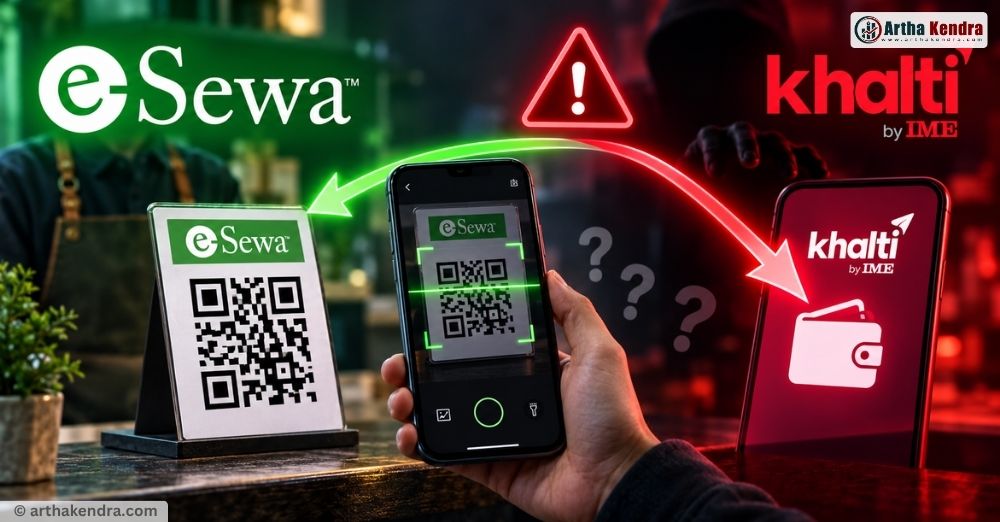
Kathmandu. A customer has reportedly faced unnecessary hassle after a payment made by scanning an eSewa QR code through Khalti was transferred to the Khalti account linked to the same mobile number instead of being credited to the eSewa account.
According to the customer, after having tea at a shop, they scanned the QR code provided by the shopkeeper and made the payment through Khalti. The payment appeared successful on Khalti, and the amount was deducted from the customer’s account.
However, the shopkeeper checked the eSewa statement and said that the payment had not been received. It was only later that the customer learned that Khalti had not actually transferred the money to eSewa. Instead, Khalti had identified the mobile number embedded in the QR code and transferred the amount to the Khalti account associated with that same number.
Since the shopkeeper was expecting the payment in eSewa, the customer eventually had to make the payment again through eSewa.
Previously “QR Not Supported,” Now the Money Is Redirected
According to the customer, previously, attempting to scan an eSewa QR through Khalti would display a “QR Not Supported” message. This made it clear that the QR could not be used for the transaction.
However, the customer claims that Khalti now allows such a QR to be scanned without providing a clear warning that the payment may be routed to a Khalti account associated with the mobile number in the QR.
The customer also claims that when attempting to send money from eSewa by scanning a Khalti QR, the system still displays “QR Not Supported” and does not allow the transaction.
This raises questions about how QR interoperability is being implemented and whether customers are being given sufficient information before completing a payment.
If a customer scans a QR belonging to another payment service, the destination of the payment should be clearly communicated before the transaction is completed. Otherwise, customers may believe they have paid the merchant through the merchant’s preferred wallet, while the money may actually be routed to a different wallet associated with the same mobile number.
Questions Over Cross-Wallet Transactions
The incident also highlights the broader issue of interoperability between digital wallets in Nepal.
Nepal Rastra Bank has been working toward enabling cross-wallet transactions so that customers can make payments across different payment service providers using interoperable QR systems. However, the full implementation of such cross-wallet transactions has yet to materialize as expected.
In the meantime, incidents such as this can create confusion for both customers and merchants. A customer may see that money has been successfully deducted from their wallet, while the merchant checks another wallet and believes the payment has not been made.
The incident raises a key question for Khalti: If a customer scans an eSewa QR, why is the payment being routed to a Khalti account associated with the mobile number without a clear warning or confirmation of the actual destination?
Digital payments are intended to make transactions faster and more convenient. However, when a successful payment results in the customer having to make another payment because the merchant did not receive the money in the expected wallet, it can create unnecessary inconvenience and confusion for consumers.
Comments
0 comments · join the conversation
No comments yet
Be the first to share your thoughts.
Add a comment
Your comment will appear after a quick review.
Comment submitted
Thanks! Your comment is in the moderation queue and will appear after verification.
Reply to comment
0 replies
Reply submitted
Thanks! Your reply is in the moderation queue and will appear after verification.