

Prime Minister Shah Questions the World - Why is There Easy Supply for War and Weak Arrangements for Food?
In addressing the 81st session of the United Nations General Assembly, Prime Minister Balendra Shah has drawn the world's attention to the recent devastating floods, climate change, and the resulting humanitarian and developmental crises in Nepal.

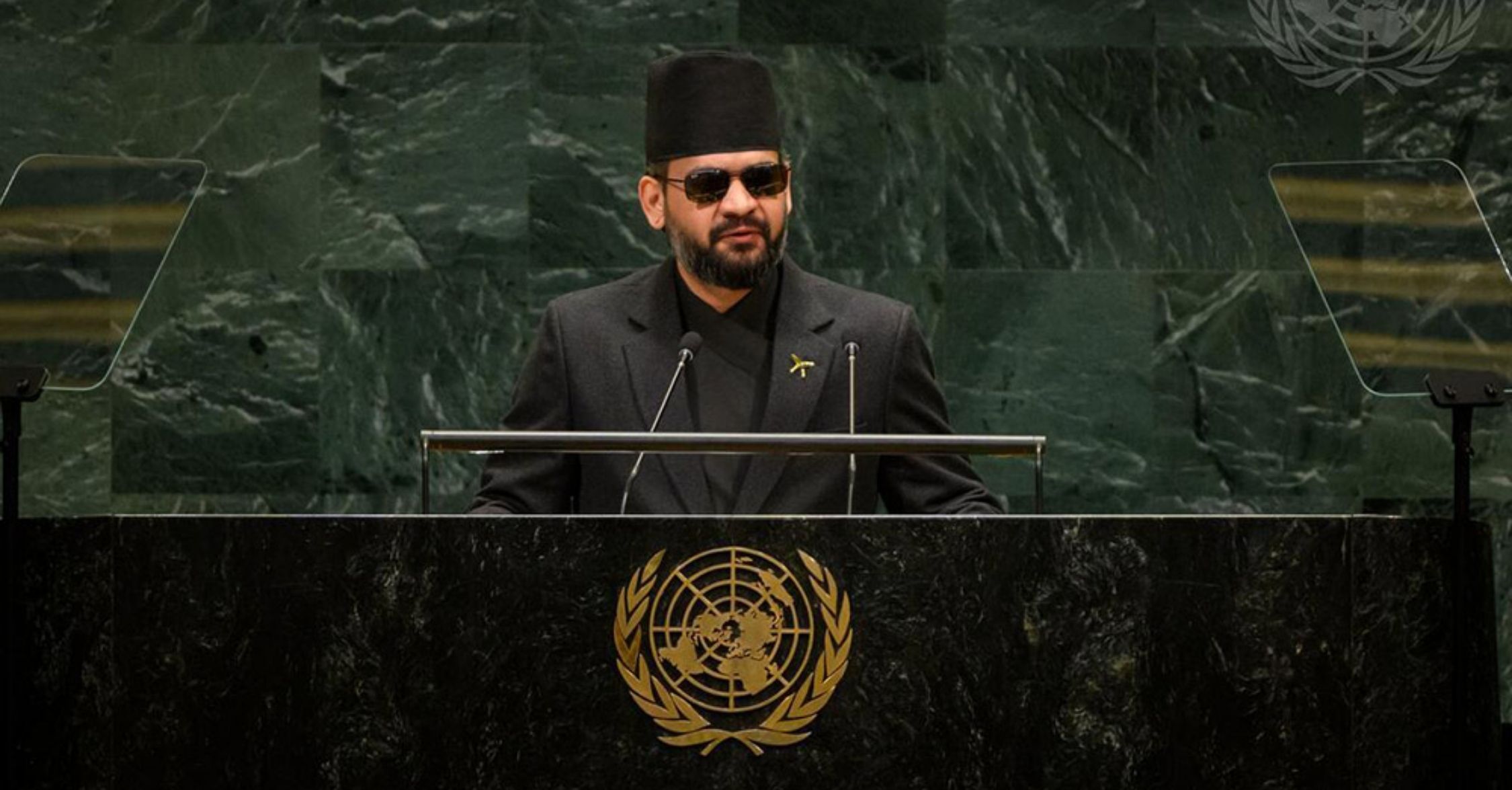
Kathmandu. Prime Minister Balendra Shah, in his address to the 81st session of the United Nations General Assembly, has drawn the world's attention to the recent devastating floods, climate change, and the resulting humanitarian and developmental crises in Nepal.
Prime Minister Shah stated that the Bhote Koshi-Trishuli flood serves as a warning not just for Nepal but for the entire world. He warned that climate change is increasing the risks of floods, landslides, and glacial lake outburst floods in the Himalayan region, emphasizing the need for immediate action, not just warnings.
During his speech, he questioned the current international order by asking what kind of international arrangement the world desires. He noted that the United Nations was established to protect sovereignty, international law, human dignity, and the rights of the vulnerable, yet now military and economic power are determining whose voices are heard.
He emphasized that Nepal requires a more just global economic system. Referring to the UN Development Programme's Human Development Report, he mentioned that security should be linked more to people than territory, and development rather than weapons, stating that we must utilize the benefits of peace to ensure freedom from fear and scarcity.
Prime Minister Shah also highlighted the challenges faced by Nepali farmers, including the lack of timely access to fertilizers, a shortage of bitumen for highway construction, and the need for families to cope with a lack of cooking fuel. He pointed out that on one hand, glaciers are melting, crop production is declining, and floods are occurring without warnings, while on the other hand, the global supply chain is burdening the poor with problems.
He raised questions about the situation where intercontinental missiles, rifles, and ammunition can easily cross borders, yet Nepali farmers cannot obtain fertilizers or fuel at market prices when needed. He stated, ‘We have created a world with easy supply arrangements for war and weak supply arrangements for food,’ he said.
Prime Minister Shah mentioned that this problem is not limited to Nepal, noting that countries in the region such as Bangladesh, Bhutan, India, Maldives, Pakistan, and Sri Lanka are also experiencing the impacts of climate change and wars that they did not initiate.
He indicated that this reflects a lot has gone wrong in the current system of global cooperation.
Comments
0 comments · join the conversation
No comments yet
Be the first to share your thoughts.
Add a comment
Your comment will appear after a quick review.
Comment submitted
Thanks! Your comment is in the moderation queue and will appear after verification.
Reply to comment
0 replies
Reply submitted
Thanks! Your reply is in the moderation queue and will appear after verification.