


Draft to Amend Three Laws Seeks to End Double Taxation, Offers Uniform Land Registration Relief and EV Parts Fee Waiver
A draft to amend three laws proposes ending double taxation among federal, provincial and local governments, putting all three tiers' revenue administration on one electronic system, and giving approved investment projects uniform land registration fee relief.

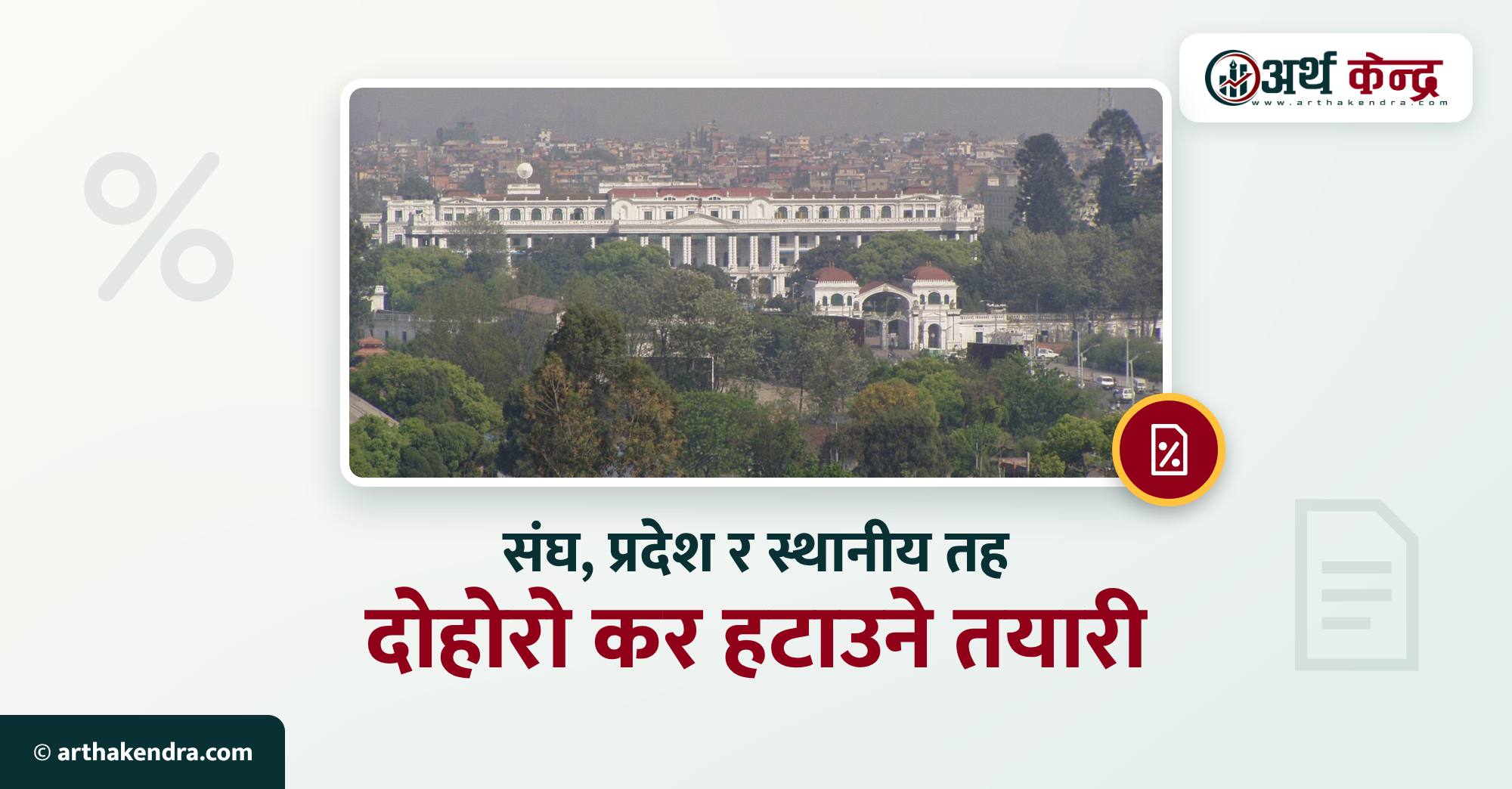
Kathmandu. The government has put forward a draft to amend three laws that aims to end double taxation among federal, provincial and local governments, integrate the revenue administration of all three tiers, and give approved investment projects a uniform concession on land registration fees.
The draft proposes adding new sections to the Intergovernmental Fiscal Management Act, 2074, amending two provisions of the Economic Act, 2083, and revising several sections of the Local Government Operation Act, 2074. Its legal effect will depend on whether it comes as an ordinance or a bill and on the final text.
One System, One Filing
A proposed Section 5B of the Intergovernmental Fiscal Management Act would require federal, provincial and local governments to offer tax and non-tax registration, filing, assessment, payment, revenue sharing and tax clearance through a single electronic system as far as possible, so taxpayers no longer have to submit the same information to different offices again and again.
The integrated system would not shift any tier's power to levy, set rates or grant exemptions to another tier. But the same kind of tax or non-tax charge could not be collected twice from the same taxpayer on the same base, transaction and period, and any proven double collection would have to be refunded or adjusted.
The draft would also bar entry, exit or transport fees charged merely because goods or services enter or pass through a province or local unit. Cost-based fees for services actually provided would still be allowed.
Impact Assessment Required for New Taxes
Provinces and local governments proposing new taxes or changing rates and bases would have to assess the effect on industry, business, investment and services in other provinces and local units, and publish up-to-date details of taxes, rates, exemptions and payment procedures online.
Disputes over taxing powers or double taxation would first go to mutual consultation and then to the Intergovernmental Fiscal Council. This would not suspend the right to go to court or the limitation periods for legal remedies.
Uniform Registration Fee Relief for Investment Projects
Under a proposed Section 5A, provinces would offer, as far as possible, a uniform concession on land registration fees when land needed for approved productive projects, including industry, energy, tourism, agro-processing, information technology, transport and physical infrastructure, changes hands.
The Ministry of Finance would propose common standards in consultation with provincial governments, based on the nature of the project, investment size, job creation, production and export capacity and revenue impact. After a recommendation from the Intergovernmental Fiscal Council, provinces could apply the concession under their own laws.
The concession would apply only to land needed for the project's approved purpose. If the land is used for something else or traded in the project's name, the waived fee and other liabilities would be recovered.
Fee Waiver on Parts for EV Makers
A new subsection in Section 11 of the Economic Act, 2083 would exempt registered industries that manufacture or assemble electric vehicles and transport equipment in Nepal from the clean infrastructure investment fee on imported completely knocked-down parts and components. The waiver would not cover customs duty, value added tax or excise duty.
Importing finished vehicles declared as separate parts, or through artificial transactions, would disqualify a company from the waiver. Beneficiaries would have to keep records of import, storage, use in production and remaining stock of the exempted parts.
The current fiscal year's budget scrapped the excise duty on electric vehicles and replaced it with a clean infrastructure investment fee based on transaction value.
The draft also proposes cutting the rate in Section 8(1) of the Economic Act, 2083 from 10% to 1%, but it does not explain the reason for the cut or its revenue impact.
Clarity on Scrap Tax, Environmental Fees and Mining
Under the proposed changes to the Local Government Operation Act, reusable construction materials such as machinery, equipment, formwork, scaffolding, steel structures, pipes or cables moved from one project to another could not be treated as scrap and charged scrap tax.
Local governments charging fees for environmental services would have to publish the legal basis, the nature of the service and how the fee is set, and could not levy an environmental tax or fee again on the same base and purpose.
Rural and urban municipalities would have to coordinate with the Department of Mines and Geology on mineral projects under federal jurisdiction, while provincial and local authority over ordinary construction minerals and river materials would remain unchanged. The draft does not propose removing provincial or local taxing powers granted by the constitution or transferring them to the federal government.
Comments
0 comments · join the conversation
No comments yet
Be the first to share your thoughts.
Add a comment
Your comment will appear after a quick review.
Comment submitted
Thanks! Your comment is in the moderation queue and will appear after verification.
Reply to comment
0 replies
Reply submitted
Thanks! Your reply is in the moderation queue and will appear after verification.