


NRB Annual Report: Blacklisted Borrowers Rise 31% to 170,793; Public Debt Reaches 45.1% of GDP
Commercial banks' bad-loan ratio rose to 5.56% while capital spending fell 14.8%, the central bank's annual report shows.

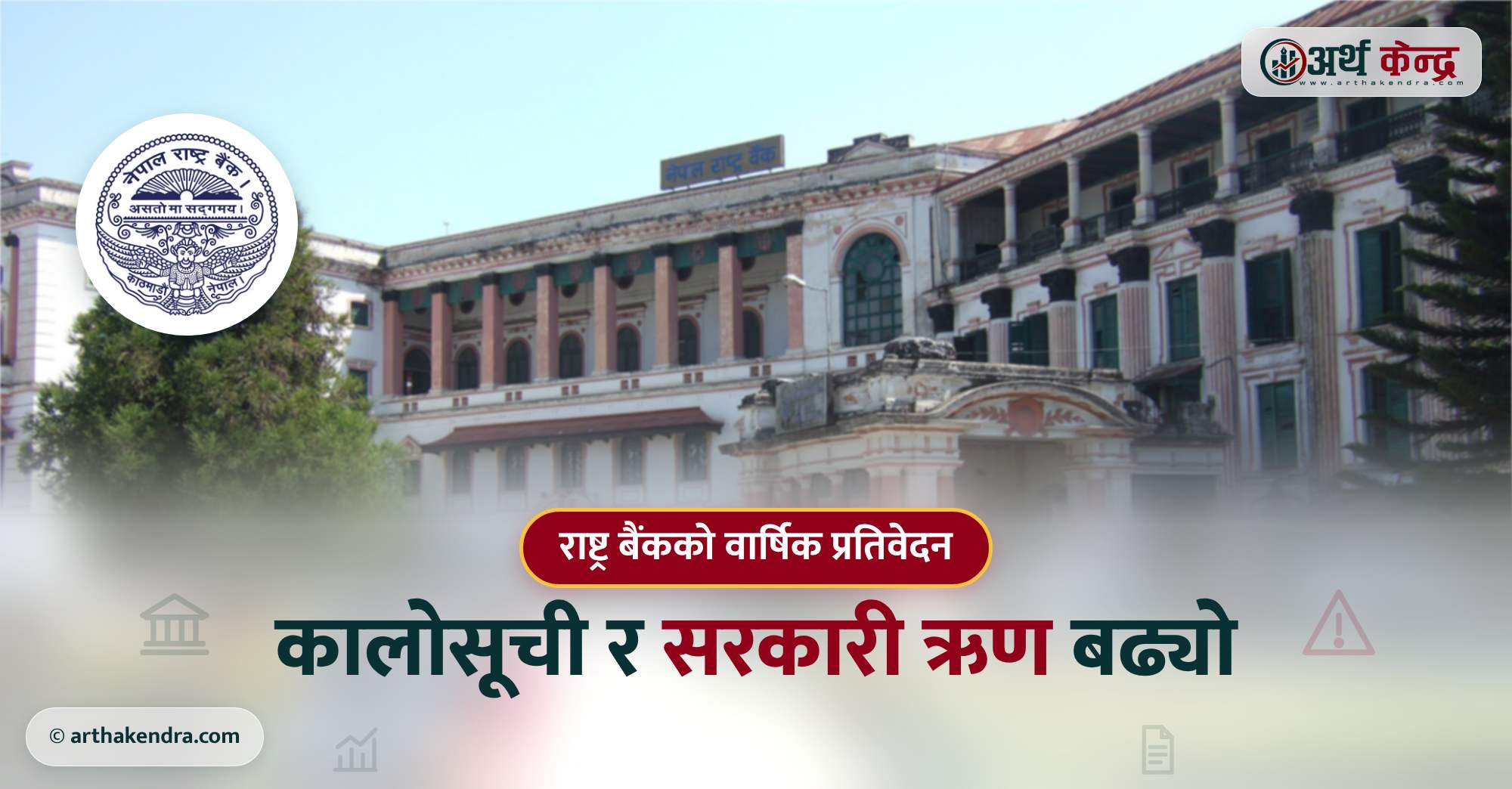
Kathmandu. The number of borrowers blacklisted for failing to repay loans rose by more than 40,000 in a year. According to Nepal Rastra Bank's annual report for FY 2082/83 (2025/26), the Credit Information Bureau's blacklist grew from 129,974 borrowers in mid-July 2025 to 170,793 in mid-July 2026.
That is an increase of 40,819 borrowers, or 31.4%. Over the same period the non-performing loan ratio of commercial banks rose to 5.56% from 4.42%, and the government's outstanding debt reached Rs 2.97 trillion.
Banking: Slow Credit, Rising Risk
Blacklist and Credit Information
In FY 2082/83, 20 commercial banks, one infrastructure development bank, 17 development banks, 16 finance companies, 50 microfinance institutions and 10 hire-purchase companies requested a total of 6.7 million loan records from the Credit Information Bureau, the report says.
The report notes that when the monetary policy for FY 2082/83 was framed, the rising non-performing loan ratio, non-banking assets and number of blacklisted borrowers at banks and financial institutions already called for caution.
Non-Performing Loans
The NPL ratio of commercial banks stood at 5.56% in mid-July 2026, up from 4.42% a year earlier. Development banks' NPL ratio rose to 5.37% from 4.63%, while that of finance companies fell to 7.66% from 8.59%.
The capital adequacy ratio of commercial banks slipped to 12.60% from 12.78% over the same period.
Deposit and Credit Growth
Deposits at banks and financial institutions grew 13.9% during the year, compared with 12.6% the year before. Credit to the private sector, however, grew only 6.5%, down from 8.4% a year earlier.
Public Finance: Capital Spending Falls, Debt Rises
Revenue and Spending
Citing the Ministry of Finance and the Financial Comptroller General Office, the report says total government expenditure rose 4.6% to Rs 1.58 trillion in FY 2082/83. Revenue mobilisation rose 5.3% to Rs 1.24 trillion.
Recurrent spending grew 9.1% to Rs 1.04 trillion, but capital expenditure fell 14.8% to Rs 190.84 billion, from Rs 223.98 billion a year earlier.
Capital spending made up only 12.06% of total government expenditure, against 65.99% for recurrent spending and 21.95% for financial provisions. Capital spending fell to 2.9% of GDP from 3.6%.
Public Debt
As of mid-July 2026, the government's outstanding external debt stood at Rs 1.60 trillion and domestic debt at Rs 1.38 trillion, taking total outstanding public debt to Rs 2.97 trillion.
A year earlier, outstanding debt was Rs 2.67 trillion. Public debt rose by Rs 300.85 billion, or about 11.3%, in one year, and the debt-to-GDP ratio climbed to 45.1% from 43.1%.
During the year the government raised Rs 358.67 billion in domestic loans and repaid Rs 250.56 billion, leaving net domestic borrowing at Rs 108.11 billion.
Comments
0 comments · join the conversation
No comments yet
Be the first to share your thoughts.
Add a comment
Your comment will appear after a quick review.
Comment submitted
Thanks! Your comment is in the moderation queue and will appear after verification.
Reply to comment
0 replies
Reply submitted
Thanks! Your reply is in the moderation queue and will appear after verification.